

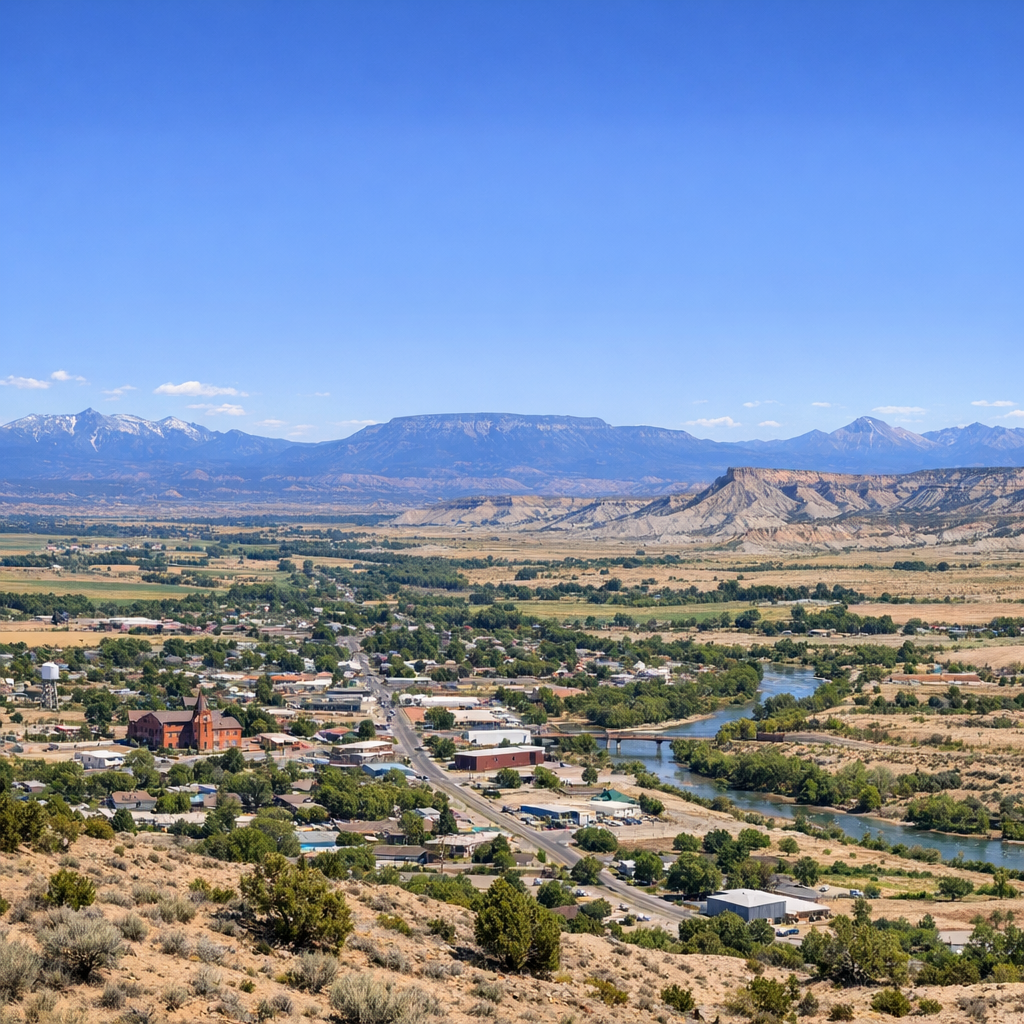
Delta, Colorado, offers a climate that combines warm summers and cold winters, characteristic of a cold semi-arid climate (Köppen BSk classification). Understanding these patterns can help residents and newcomers prepare for the year’s weather variations.
Temperature Ranges
Throughout the year, Delta experiences significant temperature fluctuations. Average high temperatures range from approximately 40°F (4.4°C) in January to around 92°F (33.6°C) in July. Conversely, average low temperatures span from about 17°F (-8.1°C) in January to 59°F (15.2°C) in July. This variation underscores the importance of preparing for both hot summers and cold winters.
Precipitation and Snowfall
Delta receives an average annual precipitation of approximately 7.52 inches (191.02 mm), with the wettest months typically being April and May. Snowfall is also a notable aspect of Delta’s climate, averaging around 41 inches per year, primarily occurring from October through May.
Seasonal Variations
Summers in Delta are generally hot and dry, with July being the warmest month. Winters are cold, with January often being the coldest month. The transitional seasons of spring and autumn offer milder temperatures and are often considered the most comfortable times of the year.
Environmental Considerations
Given the semi-arid climate, water conservation is crucial. Residents are encouraged to adopt water-saving practices and stay informed about local environmental initiatives. The Delta County Environmental Health Division offers resources on water quality, recycling, and other environmental health services.
By understanding Delta’s climate patterns, residents can better prepare for seasonal changes and contribute to the community’s environmental well-being.