

By William Perez
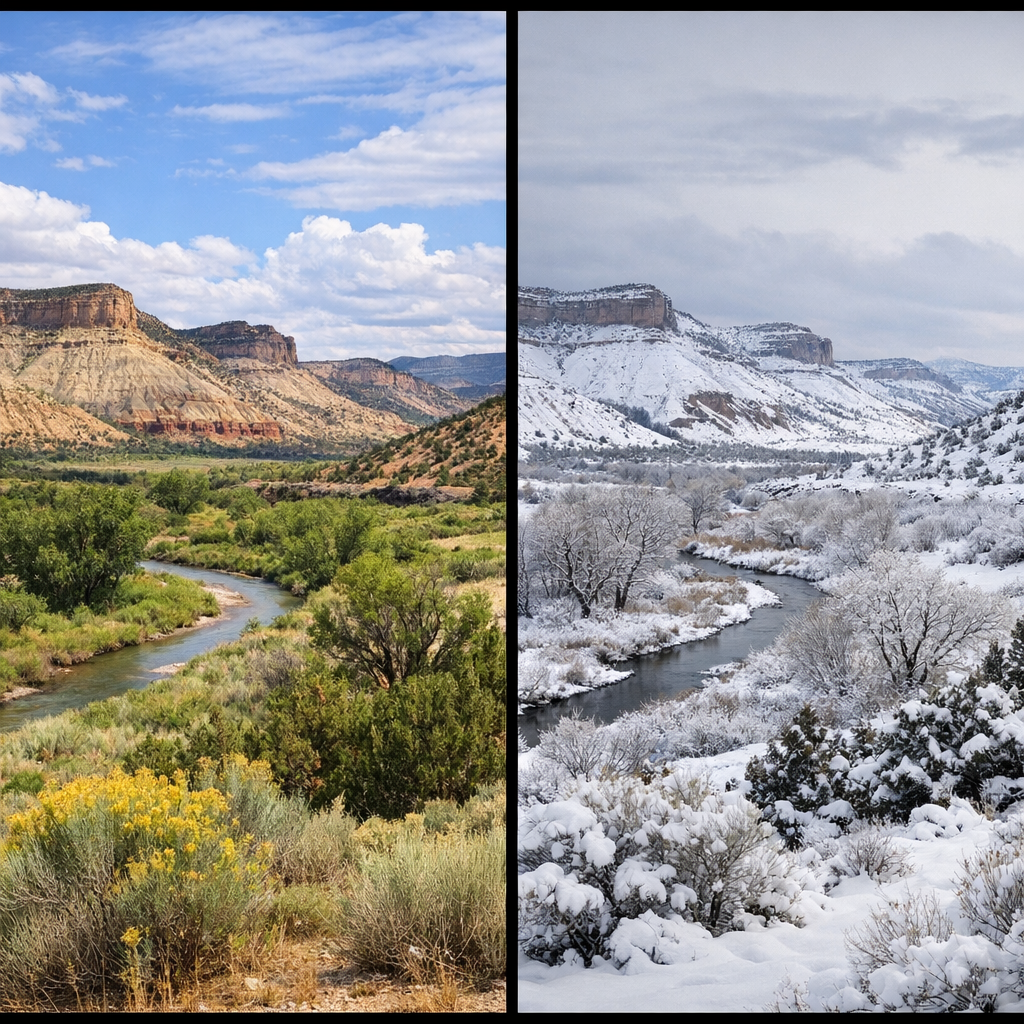
Delta, Colorado sits in the heart of the Western Slope, and its weather reflects its semiarid high-desert setting—with big swings between hot summers and cold winters, low annual precipitation, and strong environmental pressures shaping daily life. Below, a guide to what residents and newcomers should know about Delta’s climate, changing seasons, and environmental risks.
Climate At a Glance
Delta is classified as having a cold semi-arid climate (Köppen BSk). Average highs hover near 92°F in July while average winter lows fall into the teens (°F). The annual precipitation is around 7½ inches, with much of it coming in brief bursts. The frost-free growing season usually runs from early April through mid-October—about 150-180 days. The elevation and inland location contribute to sharp daily and seasonal temperature swings, low humidity, and generally sunny skies.
Seasonal Transitions You’ll Feel
Spring (April-June)
Spring brings rising temperatures, melting snow in the nearby Grand Mesa and Gunnison forests, and increased daylight. Rainfall picks up slightly—often from afternoon thunderstorms—but is still limited. As soils warm, plants begin new growth. Be alert for sudden cold snaps and remnant snow in higher elevations.
Summer (July-September)
Summers are hot, particularly in July when highs often reach into the low‐90s. Humidity remains low, making even high heat more bearable than in more humid regions, though drought stress on vegetation becomes a concern. Afternoon thunderstorms can erupt during the monsoon season (mid-July through early September), bringing short showers, lightning, and flash flood danger in vulnerable terrain.
Fall & Winter (October-March)
Fall offers cooling temperatures, color changes, and sometimes frost by mid-October. Snowfall can arrive, especially in upper elevations. Winters are cold and dry: January is the coldest month, with daytime highs often in the low 40s and overnight lows down in the teens. Snow is generally light and comes in isolated storms. Sunshine remains abundant even in winter months.
Environmental Risks & Local Impacts
Drought & Water Resources
With low precipitation and high evaporation during summer, drought is a frequent concern in Delta County. The county government undertakes long-term water quality and quantity studies, including groundwater monitoring and hydrology planning, to ensure sustainable supply. New wells and subdivisions are subject to environmental review.
Wildfire Risk
Much of Delta County lies in or near the wildland-urban interface. Hot, dry summers combined with drought and dry vegetation—especially invasive species in creek corridors—raise the threat of wildfire each year.
How to Stay Prepared Year-Round
- Track frost dates: last frost usually in early April, first frost mid-October—vital for gardeners and agricultural planning.
- Monitor drought conditions and water usage—xeriscape landscaping, efficient irrigation, and conserving indoor water help.
- Wildfire awareness: clear defensible space around homes, follow burn restrictions, and have evacuation routes mapped.
- Storm preparedness in summer for monsoon bursts: flash flood potential, lightning risk, sudden downpours.
- Winter readiness: even though snow is less frequent, keep snow removal gear, insulation, and winterizing your home in good shape.
Delta’s climate features extremes and surprises—but also beauty and resilience. Understanding the rhythm of seasons here helps us live safely, care for the land, and appreciate the unique environment we share.